
Đối với những người có tình yêu với trái bóng tròn, những trận đối đầu trong khuôn khổ Cúp C2 đều không thể bỏ lỡ. Do đó, lịch thi đấu Europa League C2 năm nay cũng trở thành mối quan tâm của nhiều người. Lịch đấu từ thời điểm này khá dày đặc với sếp cặp các đội đá với nhau, anh em có thể theo dõi 7M hoặc chọn một vài đội tuyển mà mình yêu thích.
Thông tin về giải đấu Europa League C2
UEFA Europa League (viết tắt là UEL), trước đây được biết đến với tên gọi Cúp UEFA, là một giải đấu có đội nổi tiếng vươn tầm quốc tế. Dựa trên thành tích khi tham gia giải đấu và cúp quốc gia, các đội sẽ tham gia đấu tại Cúp C2 khi mùa giải mới được bắt đầu. Đội vô địch hiện tại và cũng là câu lạc bộ thành công nhất trong lịch sử Europa League C2 chính là Sevilla.
Tiền thưởng cho đội Vô địch giải đấu này, theo cập nhật mới nhất là €8,600,000 và €4,600,000 đối với danh hiệu Á quân. Con số này cùng hào quang vô địch đem lại khiến mỗi cầu thủ trong các đội tuyển tham gia đều thi đấu hết sức mình. Có lẽ chính sự nỗ lực đem lại kịch tính đó đã khiến giải đấu này ngày càng tầm cỡ và nhận được sự quan tâm của người hâm mộ trên toàn thế giới.
Thông tin về các kỳ chuyển nhượng, các huấn luyện viên, lịch thi đấu Europa League C2 mỗi mùa giải đều nhận được sự quan tâm lớn. Đặc biệt tại thời điểm này khi mà giải đấu đang diễn ra với lịch thi đấu dày đặc, lượng người hâm mộ quan tâm tìm kiếm càng cao hơn nữa. Việc cập nhật thường xuyên và đầy đủ có thể giúp fan có thể sắp xếp được thời gian xem cùng lựa chọn đội để theo dõi.
Tổng quan về lịch thi đấu europa league C2 2023/2024 Theo thông tin về lịch thi đấu Europa League C2 được cập nhật mới nhất, có tổng cộng 64 cặp đấu sẽ tham gia đối đầu sắp tới. Thời gian diễn ra kéo dài từ ngày gần nhất là 26/10 sắp tới và trận cuối cập nhật là vào ngày 15/12/2023. Thời gian mỗi trận diễn ra cũng đã được cập nhật đầy đủ cho người hâm mộ có thể bắt đầu lên lịch theo dõi ngay từ bây giờ.
Có rất nhiều cặp đấu ấn tượng, được đánh giá là đáng mong đợi xuất hiện trong lịch thi đấu năm nay. Những cái tên quen thuộc xuất hiện cùng sự xuất hiện của các nhân tố mới, hứa hẹn năm nay sẽ là một mùa C2 đầy kịch tính và không thể bỏ qua. Sevilla với vị trí dẫn đầu của mình vẫn đang là một đối thủ đáng gờm, những nhân tố bí ẩn cũng được mong đợi sẽ vượt lên vào năm nay.
Để không sót bất kỳ trận nào, anh em sẽ cân nhắc đội mình muốn theo dõi và sắp xếp, ghi nhớ thời gian cho phù hợp. Bởi theo cập nhật lịch thi đấu bóng đá hôm nay mới nhất, lịch trùng rất nhiều trong một khung giờ của cùng một ngày. Có thể có đến 32 đội cùng thi đấu trong một ngày và tới 8 đội đá cùng giờ nên việc tìm hiểu trước và cân nhắc là vô cùng cần thiết.
Lịch thi đấu Europa League C2 – đội đối đầu và ngày giờ diễn ra
Khoảng thời gian này, anh em mê thể thao có thể vừa theo dõi La Liga vừa cập nhật lịch thi đấu Europa League C2 thường xuyên. Thời gian thi đấu cùng ngày giờ cụ thể cho những ai quan tâm đến Cúp C2 có thể cập nhật dưới đây.
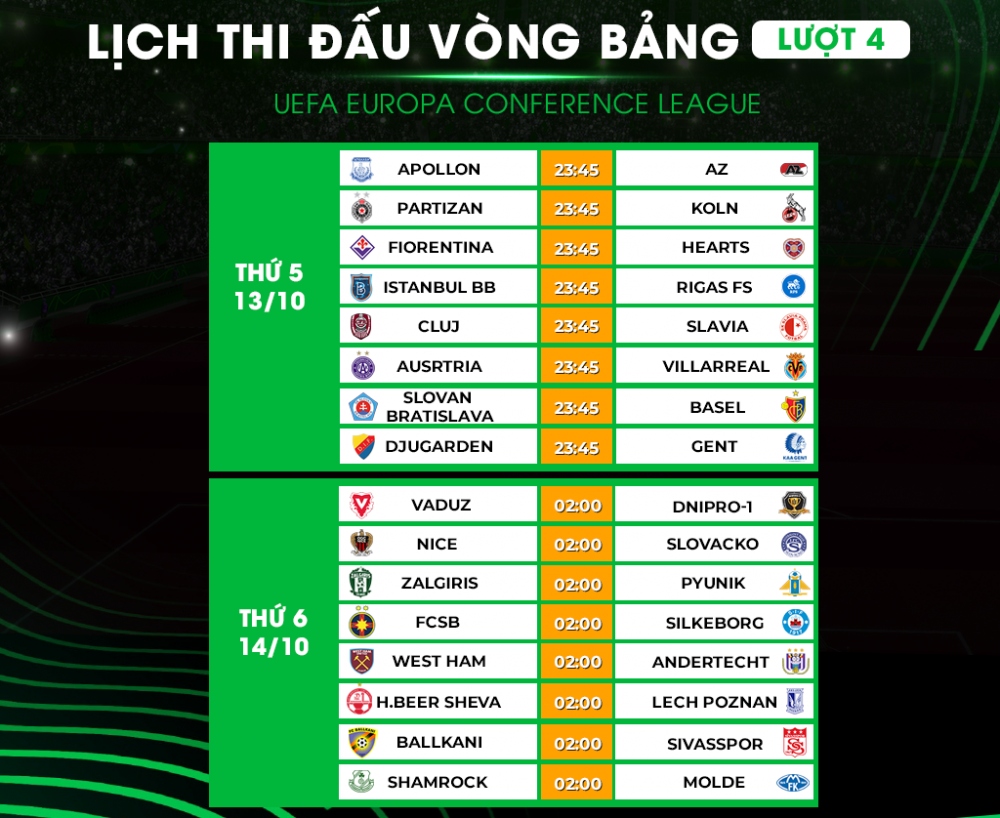
Lịch thi đấu Europa League C2 ngày 26/10/2023
Rơi vào một ngày thứ 5, lịch thi đấu sắp tới khá dày đặc khi có tới 8 đội đối đầu trong cùng một giờ của ngày 26/10. Những cái tên như Olympiakos Piraeus, West Ham United, Atalanta, Real Betis,… cùng xuất hiện trong một ngày giờ đấu. Anh em có thể cân nhắc theo dõi lịch thi đấu Europa League C2 ngày 26/10 để không bỏ lỡ trận đấu kịch tính của tuyển mà mình yêu thích.
Olympiakos Piraeus vs West Ham United sẽ là một trong 8 đội nổ phát súng đầu tiên của ngày sẽ là màn đối đầu vào lúc 23h45 của 2 đội. Nói là cặp đấu đầu nhưng thực ra, trong cùng khung giờ 23h45 còn có sẽ 7 cặp đấu khác cùng tranh tài. Gồm có TSC – Freiburg, Molde – Hacken, Olympique Marseille – AEK Athens, Sturm Graz – Atalanta, Raków Częstochowa – Sporting CP, Sparta Praha – Ranges và cuối cùng là Aris Limassol – Real Betis.
Lịch thi đấu Europa League C2 ngày 26/10/2023
Tiếp theo sẽ chứng kiến cuộc đối đầu giữa 16 đội tham gia, được xếp cặp vào 8 đội với cùng thời gian đá. Đó là vào lúc 2h chiều thứ 6 ngày 26/10 sắp tới. Một trong những cặp đấu được mong chờ trong số đó là Bayer Leverkusen và Qarabağ. Ngoài ra, phải kể đến sự xuất hiện của đội tuyển Brighton & Hove Albion trong trận đấu với Ajax, Villarreal và Maccabi Haifa.
Bên cạnh đó là sự xuất hiện của 5 cặp đấu khách cũng không kém phần hấp dẫn trong lịch thi đấu Europa League C2 ngày 26/10. Đó là Panathinaikos đấu với Rennes, Roma cùng Slavia Praha, Sheriff tham gia tranh tài cùng Servette. Hai cặp đấu cuối gây ấn tượng bởi những cái tên quen thuộc, Union Saint-Gilloise với LASK và cặp đấu kết ngày là Liverpool và Toulouse.
Theo dõi lịch thi đấu psg để biết khi nào bạn sẽ được chứng kiến các ngôi sao hàng đầu của bóng đá thế giới thi đấu.
Lịch thi đấu Europa League C2 ngày 10/11/2023
Những cái tên quen thuộc lại xuất hiện nhưng trong những cặp đấu khác, có phần hấp dẫn hơn. Đặc biệt, trong ngày 10/11 sắp tới này có đến 32 đội tuyển, được xếp thành
16 cặp tham gia đối đầu trong 2 khung giờ của ngày.
Đầu tiên là khung giờ lúc 00h45 sẽ có sự xuất hiện của 8 cặp đấu. Mở màn cho ngày là sự tranh tài đến từ các cầu thủ đội Qarabağ với Bayer Leverkusen, Ajax với Brighton & Hove Albion và tuyển Rennes đấu với Panathinaikos. Tiếp theo là tuyển Maccabi Haifa được xếp cặp với Villarreal, Servette cùng Sheriff, tuyển Slavia Praha đấu Roma, LASK tranh tài cùng Union Saint-Gilloise và cuối cùng là Toulouse với Liverpool.

Khung giờ tiếp theo vào 3h sáng, Freiburg sẽ trực tiếp đối đầu cùng TSC, West Ham United với Olympiakos Piraeus và Häcken sánh đôi cùng Molde. Không kém phần kịch tính là các cặp đấu AEK Athens – Olympique Maráeill, Atalanta – Sturm Graz, Sporting CP – Raków Częstochowa. Hai cặp cuối cùng trong lịch thi đấu Europa League C2 ngày 10/11 gọi tên Real Betis đấu Aris Limassol và cuối cùng là Rangers cùng Sparta Praha.
Lịch thi đấu Europa League C2 ngày 01/12/2023
Ngay ngày đầu tháng 12, người hâm mộ sẽ được chiêu đãi bữa tiệc thể thao mãn nhãn tại Cúp C2 khi có đến 32 đội tham gia. Được xếp cặp thành 16 đội đấu, chia đôi vào 2 khung giờ là 00h45 và 3h sáng như những ngày trước. Lịch thi đấu europa league c2 ngày 01/12 khá dày, cặp đấu nhiều và thời gian trùng lặp nên anh em cũng cần phải cân nhắc đội muốn theo dõi trực tiếp trước.
Trong đó, cặp đấu đáng chú ý nhất là Atalanta – Sporting CP, Sturm Graz – Raków Częstochowa và Sparta Praha – Real Betis diễn ra vào 00h45 sáng. Ngoài ra có 4 cặp được xếp đấu cùng khung giờ đó, chính là Freiburg – Olympiakos Piraeus, Maccabi Haifa – Rennes, TSC – West Ham United và cuối cùng là AEK Athens – Brighton & Hove Albion đối đầu.
Còn lại 9 cặp đối đầu được xếp chung trong khoảng 3h sáng cùng ngày là Molde đá với Qarabağ, Häcken đấu cùng Bayer Leverkusen, Olympique Marseille với Ajax. Còn có sự tranh tài của Villarreal cùng Panathinaikos, Servette trước đối thủ Roma, Sheriff với Slavia Praha. Được mong chờ không kém là 3 cặp cuối trong danh sách này, Liverpool được xếp cặp với LASK, tuyển Toulouse đối đầu với Union Saint-Gilloise và Rangers cùng Aris Limassol tranh cao thấp.
Kết luận
Trên đây tổng hợp cho tiết về lịch thi đấu Europa League C2 mùa giải 2023/2024 mới nhất. Ghi nhớ lịch đấu cùng thời gian đá để không bỏ lỡ những trận đối đầu đỉnh cao đến từ các đội tuyển. Hoặc anh em có thể xem lại thông tin ở bài viết này để cập nhật thường xuyên.


Pingback: Lịch thi đấu bóng đá Việt Nam, Lịch thi đấu V-league hôm nay